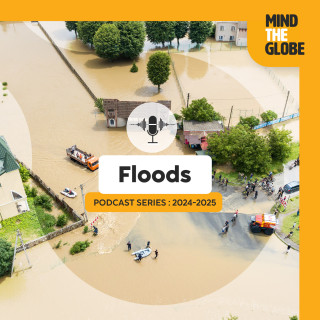
(Transcribed by TurboScribe.ai. Go Unlimited to remove this message.) Welcome to Mind the Globe, the podcast where we dive into some of today's most pressing global challenges.
Download transcript (.srt)
0:05
0:11
0:17
0:30
0:34
0:36
0:40
0:43
0:48
0:52
0:59
1:09
1:22
1:25
1:37
1:40
1:47
1:50
1:56
2:01
2:07
2:13
2:17
2:25
2:29
2:32
2:36
2:46
2:53
3:03
3:13
3:17
3:21
3:32
3:40
3:43
3:47
4:02
4:21
4:31
4:37
4:49
4:52
4:55
4:57
5:03
5:10
5:18
5:26
5:41
5:49
5:59
6:06
6:16
6:21
6:27
6:33
6:38
6:56
7:02
7:10
7:15
7:20
7:27
7:40
7:48
7:56
8:06
8:12
8:21
8:28
8:30
8:40
8:48
8:53
9:02
9:07
9:08
9:17
9:22
9:27
9:30
9:31
9:42
9:49
9:55
10:04
10:12
10:18
10:21
10:25
10:33
10:40
10:51
10:54
11:00
11:07
11:11
11:16
11:27
11:34
11:38
11:50
11:56
11:59
12:05
12:07
12:09
12:10
12:17
12:22
12:25
12:30
12:37
12:40
12:43
12:51
12:52
12:54
12:55
12:58
13:05
13:08
13:22
13:31
13:44
13:48
13:52
13:55
14:02
14:09
14:19
14:23
14:26
14:29
14:39
14:40
14:45
14:57
15:09
15:11
15:12
15:14
15:17
15:23
15:39
15:51
16:00
16:14
16:23
16:27
16:32
16:36
16:38
16:45
16:51
16:54
16:57
17:14
17:16
17:17
17:23
17:33
17:34
17:46
17:52
17:57
17:58
18:02
18:13
18:26
18:29
18:32
18:45
18:47
19:12
19:19
19:23
19:26
19:35
19:42
19:52
20:07
20:12
20:30
20:34
20:42
20:50
20:57
21:10
21:16
21:24
21:36
21:45
21:51
21:53
22:01
22:08
22:18
22:22
22:25
22:33
22:48
22:52
22:53
23:07
23:10
23:14
23:21
23:31
23:40
23:46
23:51
23:56
24:00
24:07
24:20
24:26
24:44
24:52
24:56
25:02
25:08
25:09
25:11
25:22
25:25
25:28
25:31
25:32
We are a team of seven international students from the Junior Research Lab at Institut Agro Montpellier.
Here to explore the issues that shape our world and our future.
Hello professor Niko Verhoest and welcome to the Mind the Globe podcast.
Today we will be diving into the topic of floods.
But before we begin, let's take a moment to introduce you.
I know you as a professor at Ghent University.
But for our listeners, could you briefly share a bit about yourself and your background as a scientist.
Yes, so I'm Niko Verhoest, I'm a professor at Ghent University.
I'm mainly teaching courses on hydrology and water management and flood mechanics.
As a scientist, I'm mainly involved into hydrology, remote sensing of hydraulical variables and stochastic hydrology.
So that's mainly where my background is in, let's say, remote sensing applications, soil moisture, also something on flooding in hydrology.
And how to apply these into hydrological models.
Okay, since much of your work focuses on hydrology and flooding, I'd love to know what inspired you to dive deeper into the topic of floods and make it such a significant part of your research.
My main concern is water management.
So we are looking as engineers to all types of problems that water can have on people.
One of the problems is flooding.
So we want to know where floods could happen, when they would happen, and so on.
So I got into this topic through remote sensing.
So what we want to do is use remote sensing for updating hydrological models.
Hydrological models, they provide you input to hydraulic models and hydraulic models can be used for floods mapping.
So the way I got into touch with flooding was through the hydrological modelling.
So we try to improve extreme discharges and then these can be used into hydraulic models.
Okay, so Professor Verhoest talked about hydrological and hydraulic models.
Let's discuss the difference between the two.
Hydrological models focus on the process of converting rainfall into runoff.
It estimates how much water will flow into rivers based on factors like precipitation, sunshine, and evaporation.
In contrast, hydraulic models deal with the movement and behaviour of water once it is in the river system.
They predict water levels, flow velocities, and potential flood risks by modelling how water is routed through rivers and other channels.
Simply put, hydrological models are about water quantity entering the river stream, while hydraulic models analyse how the water moves within the river.
Okay, now we know something more about your work and background.
But I'm curious, what project or collaboration are you most proud of in your career?
I think we are very proud at Ghent University, at our lab, on the work we did on remote sensing.
So we have done quite a lot of work on soil moisture estimation from radar.
And for that we did quite a lot of work for ESA.
And also for, for instance, the SMOS satellite.
We have been selected as the principal investigator for a project to demonstrate the benefit of SMOS observations for hydrological monitoring.
And so we were able as a small research lab in Ghent, we were heading a project together with Princeton University, together with Toulouse, who are the developers of the SMOS, together with Melbourne University.
And so we had quite a lot of high stake researchers along with us, but we were able to manage this project.
And so this, I think we did some interesting work and so quite some of the research has been published there as well.
So I think that was one of our, because of a long term research on radar remote sensing, that we were able to guide such a project, to supervise such a project.
All right, as you've heard, Niko Verhoest talks about SMOS.
But what exactly are SMOS observations?
Let's take a look.
SMOS observations are collected by a satellite that measures the natural emission of microwaves from the earth.
These microwave signals vary based on the earth's surface temperature and soil moisture content.
By analysing the emitted microwaves, SMOS data allows researchers to estimate soil moisture levels across large areas.
This information is then integrated into hydrological models, where the observed soil moisture is compared to model predictions.
Through data assimilation, these observations are used to update and refine hydrological model outputs, leading to more accurate estimates of soil moisture and improved predictions of river discharge.
This kind of developments are particularly crucial as climate change continues to transform weather patterns across the globe.
Shifts in rainfall distribution, increasing extremes in water events and disturbances to natural water systems are becoming more frequent.
Such changes raise pressing questions about how we can prepare for and respond to these challenges.
With that in mind, my next question is, how do climate change and global warming influence both the frequency and intensity of floods?
We expect that the frequency and intensity will be increasing.
The reason is that due to climate change, we will get warmer air.
If you have warmer air, then we know that more water can be held by the atmosphere.
So if you have more water in the atmosphere, we can also face bigger rainstorms.
So if you have rain with a much higher intensity falling on the land, then this will cause much more water that is flowing to the rivers, and rivers have to try to transport all this water to the sea.
But the rivers are not large enough, so that means that they will overtop and they will cause flooding.
Given the fact that we expect more of these big rainfall events, we can also expect more flood events.
In the face of these growing threats, proactive measures are essential.
This is where flood forecasting and early warning systems come into play.
These systems are vital for saving lives and minimising damage by prediction when and where floods might occur.
By providing timely information, they enable communities to prepare and respond effectively, mitigating the devastating effects on people, infrastructure and ecosystems.
Given their importance, could you explain the science behind flood forecasting and how early warning systems work to keep us safe?
So if you look at flood forecasting, that mainly concerns physical modelling.
So we try to solve the partial differential equation that is valid for a river.
That's quite challenging, so it means numerical modelling that we have to do to solve this.
So we need to do that with good information about how the river is looking like, what the shape of the river is at different sites.
And by that we can try to model or to solve the partial differential equations.
So that's the science behind it.
Let's say that the physics is already known for a very long time, but the way to solve it takes quite some time.
Although with current computers, the time to solve these equations is much shorter.
So that is the current status.
So these models are well developed and we keep on making them a little bit more complicated by going from 1D to a 2D or maybe 3D model.
But they are all based on physics that is quite well known.
But there are some challenges with them.
One of the challenges is to estimate the roughness coefficient for each section in the river, which is not known.
So often this is a calibration parameter.
But this roughness can change in time, because for instance vegetation may grow, so the roughness may grow.
So that's also a question of how do you deal with that.
So that's a tricky one.
So we can do it partially by including some observations and use these to try to estimate the roughness.
But then these models, they're pretty good and they can be used in forecasting.
That means that you also would need a forecast of the discharge that is going into the river.
So for that you need hydrological models that convert the rainfall into inflow to the river system.
Of course, the better the hydrological models, the better the input to the river system and the better the hydraulic predictions will be.
But as you know, this will also be uncertain, this hydrological model.
So uncertain input goes into your hydraulic model.
Your hydraulic model makes errors itself also.
So that means that the predictions are quite certain for the very first few hours in head time.
But the further you go into the future, the more uncertainty of the predictions will become.
Now, if you can forecast with a certain certainty for a couple of hours to days, then you can use it to warn people.
That a flood may happen and so on.
Of course, this will be, let's say, the floods that overtook the riverbanks.
But if the riverbanks would fail at certain points, this is something that cannot be estimated by the normal models.
Because then you should know where the banks will fail.
So not all of the floods can be predicted that easy.
But if you have some predictions of a couple of days in advance, then you can start warning people so that they can try to get rid of the most expensive things in the flooded area.
So that they can try to decrease the costs that will be along with a flood event.
Recent events in the south of France highlight the importance of such systems.
On October 17, 2024, the region was struck by extreme rainfall, with some areas around the Ardèche recording up to 600 mm within 48 hours.
This catastrophic rainfall event resulted in massive flooding and significant material damage.
Could an event like this have been predicted?
And are there measures that could have helped prevent or mitigate the devastating impact of this rainfall in the Ardèche?
Difficult question.
In that sense, could we predict?
Yes, most probably.
I think that Meteo France somehow predicted also that the rain was going to be very, very high.
You could put this into a hydraulic model and you would see that floods would happen.
And so you could use that in warnings.
But preventing it would need some management to your river system.
And this management means that you may need some flood basins or things like that.
It's something that you cannot install in a couple of days.
So we need to manage the river system.
And this is something, sometimes projects of many years, where you have to investigate where are you going to do some mitigation measures?
How are you going to do them?
To what extent will they work?
And so on.
So that's something that cannot be done in a couple of days.
So preventing, yes, but to a certain extent, we cannot prevent everything.
So I think that this is what happens now.
Warning and trying to get ready to save people and to enroll some disaster plans or to make them work is the only thing that you can do at that point.
But really taking measures that will mitigate the full extent of the flood is, I think at that point, impossible.
While traditional approaches to flood prediction and mitigation rely heavily on long-term planning and physical infrastructure, they often fall short in addressing the full extent of extreme events like those seen in the Ardèche.
This is where state-of-the-art technologies come into play.
Artificial intelligence is a hot topic in nearly every field today.
Revolutionising the way we solve problems.
Its potential in managing natural disasters like floods is particularly exciting.
How do advanced technologies like AI, machine learning and satellite imaging improve flood prediction?
That's an evolving field where I've been thinking about it quite a long time already.
There's one thing I think is problematic.
If you want to do AI, you need a lot of data.
So you could do AI.
If you would need a lot of data, you would have to go almost global scale or at least include many, many different basins to have sufficient data.
It's a difficult one.
We need data, but the problem here is that it's not only point data, it's also temporal data.
So data at maybe different points within one basin along the river to be sure that you get the extents at the different sides of your river system.
But you also need long, long periods to estimate, to also include the extreme events, because AI will be able to mimic what has happened and extrapolating.
In the end, it's only an empirical model.
Even AI is an empirical model.
I don't know.
We'll see definitely some things being happening.
But at this point, I don't think that AI will provide us a solution.
I believe more in hybrid modelling, which is actually a model that is driven by physics, where there are some components where we still need some empirical work, that there you could use some AI to improve this empirical relationship.
To me, at this point, with my knowledge, I think this has more chance for success than a purely AI-driven flood forecasting model.
While warning systems and long-term river management projects are essential for mitigating the impacts of extreme rainfall events, certain environments present unique challenges.
In urban areas, like regions around the Ardèche, where infrastructures such as roads, buildings and impermeable concrete surfaces dominate, managing floods becomes even more complex.
These densely populated regions face heightened risks of flash floods due to reduced natural drainage and higher runoff levels.
What are the key challenges in addressing flood risks in these urban areas?
How do urban features contribute to these difficulties?
And how can cities better prepare to handle flash floods?
Urban environments are quite difficult.
Urban environments are very often along the rivers, because it's historically that people started to build along the rivers.
And so, one of the problems in urban systems is that the river doesn't have a lot of place.
So, we build near the banks.
So, if the bank overtops, it's in the building.
The main challenge that you have in a city is to make sure that if it floods, it doesn't flood in the city centre or places where there are buildings, but that you try to have the floods happening at places where you don't have buildings.
Now, there are two types of floods.
One is a pluvial flood.
That means that the flood is just mainly coming from water that is flowing overland due to excessive rain.
So, these could be transported, could be routed to some places in the city where you can temporarily trap the water before it goes to the river.
So, that would be one.
So, it could be some kinds like wadis and things like that, that you can take the water to that place and store it until the highest discharges in the river are gone.
Or you can flow it to the river or you can keep it there and let it infiltrate into the soil.
Niko Verhoest explained the management of wadis to overcome pluvial floods.
But what is a wadi?
Well, wadis are a smart water management solution.
They channel rainwater during heavy storms, reducing flood risks and allowing water to infiltrate the soil, replenishing groundwater reserves.
In some areas, they've been adapted to capture and store water for irrigation, making them a practical and sustainable way to manage scarce water resources by improving resilience to droughts and floods.
We just discussed the pluvial floods.
Now we will listen to the second type of flood.
But the other one, which is the fluvial, that means the flood that is coming from the river itself because the river took too much water and just goes into the city and there it doesn't have sufficient place within the banks, so it floods.
That's another one.
For that, I think you need to go to the upstream area of your city and try to create some areas where you can temporarily store excess water in the river so that the water is stored in flood reservoirs so that less discharge flows to the city and thus can be taken, can be transported within the banks and does not overtop.
Of course, this means that you need, for both types of floods, you need different types of systems.
One is upstream of the city.
The other one could be partially in the city itself.
As you've just seen, floods present complex challenges, particularly in urban areas where managing excess water is especially difficult.
However, natural ecosystems like wetlands and forests can play a crucial role in flood control.
What role do you see these ecosystems playing in improving flood resilience and how can we better integrate them into flood management strategies?
These systems, they are typically, well, they're typically areas or they could be areas where especially wetlands or areas which are wet and so near the river from nature.
So these areas could be used to store water when you have a lot of floods.
You could use them for storing water during flood events so that the water is stored within your wetlands and not maybe somewhere downstream in city centers or other places where you could have some costly floods.
So actually, I think these are areas that could be used.
The vegetation is adapted to quite a lot of water so it's not that floods are causing huge ecosystem problems.
Also, with other natural areas like forests and so on, could also store some water.
They can't flood for a while if this is not like weeks and weeks in a row, but they can take some water.
The trees may be in some kind of stress for a while, but they can handle it if the water is then stored there for a couple of days and then is removed when the discharge in the river is safe enough to remove additional water.
So I think that it's an important part that we can use.
We can use some of our natural systems as an additional way of buffering excess water.
Okay, we've talked a lot about floods, their intensity, the challenges they bring, the impacts of climate change and the ways we can manage them through technology and natural solutions.
With all this in mind, what do you think young people should understand about floods and their importance in shaping sustainable water and environmental management?
And do you have any take-home messages, especially for those who might consider becoming scientists in this field themselves?
Yeah, difficult.
But I think it's very important for them to understand that water is a very costly natural resource.
So water, it falls from the sky, but it's somehow not for free.
This water, we can use it for drinking water, but it just needs some modification to be sure that you can use it as drinking water.
But there are two things about the hydrological cycle that is important.
One is too much water, which is in floods.
But on the other hand, I think that's also very important and even more important is that we have to make sure that we also have water when it's dry for very long periods.
And there, I think it should be important that people understand that we need to store the water somewhere in our natural system so that we can use it in, or that the ecosystem can use it in dry periods.
And that means that where we can store it is in the soil, in the ground.
So we have groundwater.
So we fill up the groundwater so that this water can be used during spring, during summer for our plants so that they can grow, that they can, our plants offer coolness.
Somehow plants offer us food, so that's important.
But also in summer, it provides water to the river system.
So if we don't want the rivers to run dry in summer, we actually need the groundwater table to be full in winter.
So we need to be able to infiltrate water into the soil so that we have sufficient water left for the periods where there is not that much water.
And then second, it's typically during hot periods, the periods in summer where people like to go swimming.
And so I think it's not a good idea that each person, each family has its own swimming pool.
Filling the swimming pool during summer when it's a dry period, so we are lacking water.
So then still using that water to fill swimming pools, I don't think it's a good idea.
Taking a shower two times a day or three times a day because it's hot is not a good idea.
So we have to be very careful about the amount of water that we use during dry periods.
And during wet periods, yeah, we have to understand that we will always face floods, but that we can try to reduce them by ensuring that we can infiltrate the water into the soil.
Each drop that is infiltrating in the soil is not flowing to the river and is not causing a flood.
So I think that is important to know and that we need some areas into the landscape that we can use as flood basins so we cannot build everywhere, but you also need to have some spaces that we assign to water.
And that these areas are not used all the time, but maybe only once every 10 years, every 15 years.
You could have multiple uses like agriculture in these areas.
And if it floods, then you can pay the farmer for the cost that he has.
But people have to understand that we need sufficient area for water.
And that's quite important.
So we cannot build everywhere.
And I think that is important for our current generation, but also for the next generation that they are aware that nature will not stop flooding because we build everything.
The more we build, the more floods we will create.
I think that is important.
Thank you, Niko Verhoest, for being with us today on Mind the Globe.
Thank you very much.
And thank you all for tuning in.